
Self-Managed Super Funds (SMSFs) have increasingly embraced cryptocurrency as a legitimate asset class, transforming what once was considered fringe speculation into a mainstream investment choice. As digital assets like Bitcoin and Ethereum become integral to many retirement portfolios, trustees face a complex regulatory landscape that demands precise compliance and robust governance. The Australian Taxation Office (ATO) has intensified data-matching efforts, gathering transaction details from crypto exchanges to scrutinize SMSF activity meticulously. Non-compliance no longer flies under the radar; failing to meet the strict superannuation rules can lead to severe penalties, disqualification of trustees, and loss of crucial tax concessions.
While laws allow SMSFs to invest in cryptocurrency, the grey zones of compliance and regulation raise challenging questions about asset ownership, trust deed provisions, tax treatment, and permissible investment strategies. Trustees must navigate these intricate obligations to safeguard their retirement assets and remain ATO-friendly. This article explores the nuances of crypto investment in SMSFs, demystifying the key regulatory requirements, uncovering common pitfalls, and shedding light on how trustees can confidently align their crypto stakes within the superannuation compliance framework.
Key Highlights:
- SMSFs can legally hold cryptocurrency provided the trust deed expressly allows digital assets.
- Compliance requirements are stringent, including documented investment strategies tailored to crypto’s unique risks.
- Asset separation is critical: SMSF crypto assets must not be mingled with personal holdings.
- Taxation involves capital gains events on every crypto disposal and ordinary income treatment for staking and DeFi rewards.
- ATO’s extensive data-matching program ensures unreported crypto activity is detected swiftly.
- New crypto activities like staking and NFTs bring additional compliance intricacies with distinct tax treatments.
Trust Deed and Investment Strategy: Foundations for SMSF Crypto Compliance
Before a trustee can even contemplate acquiring cryptocurrency within an SMSF, the trust deed must explicitly permit digital assets as an allowable investment category. Older SMSFs often have trust deeds drafted before the rise of cryptocurrencies and may reference traditional assets only, such as shares, real estate, and cash. This gap creates a fundamental compliance issue because holding cryptocurrency without clear authorization puts the SMSF at risk of breaching superannuation laws.
This situation is more than a legal technicality—it forms the cornerstone of compliance that auditors rigorously check. Given that the ATO mandates specific inclusion of crypto in the deed, trustees are well advised to consult with SMSF specialists to update their deeds before purchasing anything crypto-related.
Equally important is updating the fund’s investment strategy. Trustees must formally integrate cryptocurrency into their documented strategy, reflecting why digital assets suit the fund’s risk tolerance and the members’ retirement objectives. This goes beyond ticking boxes; the investment strategy should detail the permitted exposure to crypto, liquidity management plans considering the asset class’s volatility, and explicit acknowledgment of risks such as price swings, security threats, and regulatory uncertainties.
Failing to update the trust deed or investment strategy creates compliance traps that auditors will flag immediately. For instance, an SMSF holding Bitcoin while still citing only traditional investments in the strategy becomes technically non-compliant. Trustees should therefore treat documentation as a critical governance tool, not just a formality.
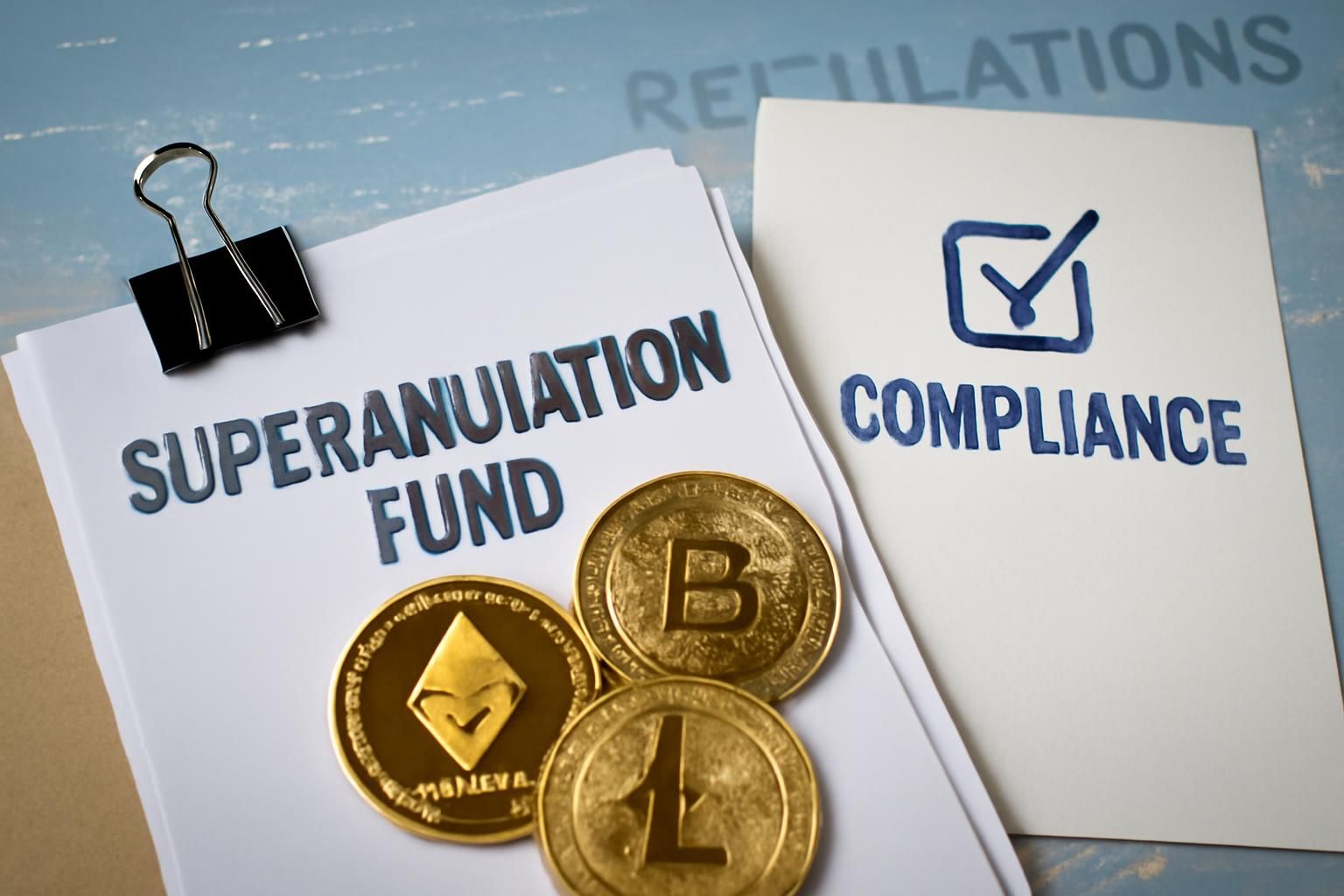
The Sole Purpose Test and Asset Separation: Navigating SMSF Crypto’s Most Common Grey Zones
The sole purpose test is the foundation of SMSF legality: the fund must be maintained exclusively to provide retirement benefits to its members. Applying this to cryptocurrency means trustees cannot use crypto assets held in the SMSF for personal trading, paying for goods/services, or any other personal benefit. The fund’s cryptocurrency wallet must belong solely to the SMSF and be used strictly according to trustee duties.
One of the most frequent compliance breaches is asset commingling. The ATO and auditors often encounter situations where SMSF trustees hold crypto in personal wallets or exchange accounts, undermining superannuation law’s clear separation requirements. Such arrangements expose the fund to significant audit risks and may be considered personal assets, resulting in penalties.
In practice, compliance demands that:
- The SMSF holds a dedicated exchange account under the fund’s ABN, not personal names.
- The SMSF uses separate wallets, such as hardware wallets or custodial wallets, exclusively controlled by the fund.
- Private keys and access rights are documented meticulously, evidencing the trustee’s control in a fund capacity.
These segregation steps can seem cumbersome but are essential protective measures. They ensure the SMSF’s crypto holdings are incontrovertibly distinct from any member’s personal assets, insulating the fund from disputes or ATO scrutiny. If you’re curious about best practices in establishing this separation, resources like the ATO’s guidance on SMSF crypto assets provide invaluable compliance insights that trustees would do well to study.
Tax Treatment and Disposal Events: Understanding SMSF Cryptocurrency Obligations
Cryptocurrency held in an SMSF is treated by the ATO as a capital gains tax (CGT) asset rather than currency or money. This treatment brings several layered tax implications, making every disposal of crypto a taxable CGT event that must be reported accordingly. A disposal is broadly defined — it includes selling crypto for Australian dollars, swapping one coin for another, using crypto to pay for services, gifting, or transferring assets between wallets that alter ownership.
Many trustees mistakenly report only cryptocurrency sales to cash as disposals, overlooking crypto-to-crypto trades. The ATO has flagged this omission as a frequent audit trigger since every swap generates a separate CGT event on the disposed asset. Not treating these swaps properly can result in amended assessments and significant penalties.
The tax rates applicable within SMSFs depend on the phase of the fund:
| Holding Period | Accumulation Phase Tax Rate | Pension Phase Tax Rate |
|---|---|---|
| Less than 12 months | 15% (full gain taxed) | 0% (tax-free) |
| More than 12 months | ~10% (after one-third CGT discount) | 0% (tax-free) |
Additionally, staking rewards and income generated through decentralized finance (DeFi) protocols are treated as ordinary income when received and taxed within the SMSF at applicable rates. This creates an extra layer of accounting complexity because separate reporting of income and subsequent CGT events must be maintained meticulously to satisfy audit requirements.
Due to the complexity around crypto transactions and associated income streams, trustees often benefit by leveraging specialized crypto tax software and professional advice. Those aiming to deepen their understanding of the tax and compliance issues are encouraged to consult comprehensive guides, such as the Agilis CA blog on SMSF crypto compliance, which articulate the nuances in clear, practical language.
Staking, NFTs, and DeFi: Emerging Compliance Challenges for Crypto in SMSFs
The evolving crypto landscape introduces new investment forms that carry distinct compliance considerations within SMSFs. Staking—where SMSFs lock digital assets to support network operations and earn rewards—is increasingly popular but not without regulatory scrutiny. The ATO treats staking rewards as ordinary income at the time of receipt, necessitating careful valuation in Australian dollars and timely declaration in annual returns.
Similarly, participation in DeFi protocols generates interest or yield also considered ordinary income. Given the potentially high transaction volumes and the complexity of DeFi activities—such as liquidity pool movements or wrapped token swaps—trustees face significant challenges in tracking and reporting all taxable events accurately. This complexity underscores the indispensability of professional advice and advanced accounting tools to ensure full alignment with superannuation obligations.
Non-fungible tokens (NFTs), though a niche within the broader crypto ecosystem, have also found their way into SMSF portfolios. The ATO classifies NFTs as CGT assets, meaning purchases and disposals trigger similar tax events to other cryptocurrencies. Trustees must update their trust deeds and investment strategies to accommodate NFT holdings and keep detailed records to pass audits successfully.
The risks in these new crypto investment realms are compounded by the ATO’s active surveillance, especially through its comprehensive data-matching programs that now span into the 2025–26 financial year. Trustees must be vigilant and proactive to avoid compliance pitfalls in these emerging grey zones.
Record-Keeping, Audit Preparation, and Proactive Compliance for SMSF Crypto
Thorough record-keeping is the backbone of successful SMSF crypto compliance. Auditors demand detailed transactional data that includes dates, quantities of cryptocurrency, Australian dollar values at time of transaction, wallet addresses, and unique transaction hashes. Simply providing screenshots or partial records is insufficient in modern audit contexts.
Trustees should maintain exhaustive exchange statements covering every buy, sell, swap, staking reward, and internal transfer throughout the financial year. These documents must correspond with a documented 30 June market valuation, using credible exchange prices denominated in AUD. Proper valuation evidence, such as dated screenshots or exported reports, is essential to satisfy the ATO and auditors alike.
In addition, trustees must record formal minutes authorizing each investment decision and confirm that all crypto holdings align with the updated investment strategy. Meticulous adherence to these practices not only ensures audit readiness but also serves as a defensive shield against future compliance disputes.
To simplify compliance, many trustees now use dedicated crypto tax software solutions integrating directly with exchange accounts to automate transaction reporting and valuation processes. This approach minimizes human error and maximizes transparency, enabling trustees to confidently navigate the increasingly intricate SMSF crypto environment.
| Compliance Action | Purpose | Best Practice Example |
|---|---|---|
| Update Trust Deed | Authorize crypto as permitted investment | Review and amend deed with SMSF specialist before first purchase |
| Investment Strategy Revision | Justify crypto exposure and risk in documented strategy | Incorporate crypto rationale, allocation %, and liquidity management |
| Separate Wallets and Exchange Accounts | Ensure asset segregation and ownership clarity | Use SMSF ABN-registered accounts with documented key control |
| Comprehensive Record-Keeping | Facilitate audit and ATO verification | Maintain transaction histories, 30 June valuations, and trustee minutes |
| Use of Crypto Tax Software | Accurate reporting of complex transactions | Connect API to exchanges for full transaction capture and report generation |
Recognizing the evolving regulatory landscape and heightened scrutiny around cryptocurrencies, a proactive compliance approach is not just prudent but essential. Trustees who engage experts early, incorporate best-practice standards, and document their decisions effectively position their SMSFs for sustainable success in the digital age.
Can an SMSF legally hold cryptocurrency?
Yes, provided the trust deed permits digital assets and the fund complies with detailed regulatory requirements laid out by the ATO and superannuation laws.
What are the biggest compliance risks for SMSF crypto holdings?
The most common risks involve inadequate asset separation, outdated trust deeds, improper reporting of crypto-to-crypto transactions, and failure to document staking or DeFi income correctly.
How does taxation on cryptocurrency work inside an SMSF?
Cryptocurrency disposals trigger capital gains tax events similar to shares, while staking and DeFi yields are treated as ordinary income at receipt. Compliance demands meticulous tracking and reporting of all events.
Is it permissible for SMSFs to transfer personal cryptocurrency into the fund?
No, SMSFs must purchase cryptocurrency with fund cash using market exchanges. Transfers of personal crypto holdings into the SMSF breach related-party acquisition rules and are prohibited.
What tools help SMSF trustees manage complex crypto compliance?
Specialized crypto tax software connected directly to exchange accounts via API automates transaction tracking, valuation, and generates audit-ready reports, ensuring all crypto activities comply with ATO requirements.