
In the evolving landscape of global finance, the intersection between traditional monetary policies and the dynamic realm of digital assets continues to capture widespread attention. In 2026, the way in which the Reserve Bank of Australia (RBA) cash rate influences Bitcoin prices and broader cryptocurrency market trends has become a crucial consideration for investors, analysts, and policy makers alike. This relationship underscores the growing recognition of digital assets as integral components of diversified investment portfolios and highlights how economic policy reverberations extend beyond conventional financial markets.
The RBA cash rate, as a critical lever of monetary policy, serves multiple functions including controlling inflation, stabilizing the currency, and promoting sustainable economic growth. Its adjustments signal shifts in borrowing costs, liquidity availability, and investor confidence within the Australian economy and international capital markets. Bitcoin, often perceived as a hedge against inflation and a store of value alternative to fiat currencies, reacts to these signals in ways that increasingly reflect its maturation as an asset class.
Understanding how RBA’s interest rate decisions influence Bitcoin involves appreciating not only the direct impact on market liquidity and investor risk appetite but also the complex macroeconomic interactions that shape capital flows across asset classes. By exploring the mechanisms through which monetary policy transmit through the financial ecosystem, this article sheds light on the nuanced dynamics affecting Bitcoin prices and the broader trends within the cryptocurrency market. The effects are particularly salient as investors seek clarity amid ongoing volatility driven by inflationary pressures, geopolitical uncertainties, and shifting regulatory landscapes across global markets.
Key takeaways:
- The RBA cash rate adjustments significantly influence liquidity and risk sentiment, which in turn impact Bitcoin prices and market trends.
- Interest rates drive capital flows away from or towards cryptocurrencies by altering traditional investment attractiveness.
- Inflation expectations and economic signals embedded in RBA’s policy decisions mold investor behavior in crypto markets.
- Understanding macroeconomic indicators linked to the RBA aids in forecasting cryptocurrency price movements.
- Market volatility in traditional assets like equities and gold often precedes shifts in Bitcoin and altcoin prices.
How RBA Cash Rate Functions as a Monetary Policy Tool Affecting Cryptocurrency
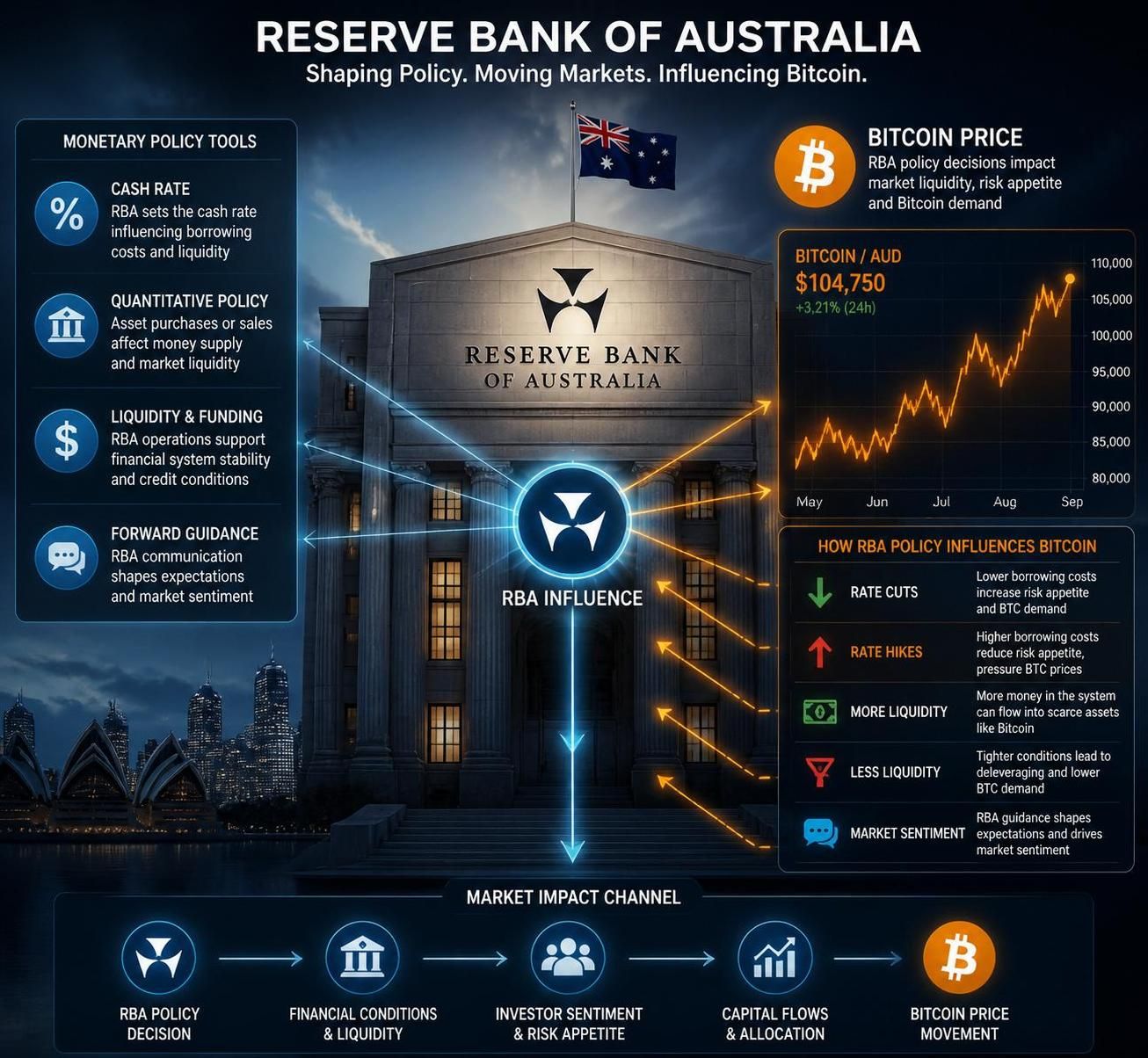
The Reserve Bank of Australia uses the cash rate as its primary instrument to influence the economy’s monetary conditions, directly affecting market liquidity and financial asset valuation. When the RBA raises the cash rate, borrowing costs for individuals and businesses increase, resulting in tightened liquidity and more cautious investment behavior. Conversely, a reduction in the cash rate lowers borrowing expenses, potentially releasing more funds into the economy and encouraging risk taking.
For Bitcoin and other cryptocurrencies, such changes in liquidity conditions have profound implications. Since cryptocurrencies do not yield traditional interest like bonds or savings accounts, their attractiveness partially depends on comparative returns and perceived risk. When the RBA increases its cash rate, investors may prefer safer, yield-generating assets over digital assets, leading to price pressure on Bitcoin. This scenario becomes more pronounced when traditional financial products offer better risk-adjusted returns amid rising interest rates.
Conversely, a lower cash rate environment encourages investors to seek higher returns in alternative assets like Bitcoin. This drive for yield can manifest as increased demand for digital assets, pushing Bitcoin prices higher. Moreover, easy monetary conditions support speculation and elevated risk appetite, fueling bullish sentiment within cryptocurrency markets. This cyclical relationship between RBA rate settings and crypto demand underscores the critical role of monetary policy as a transmission channel influencing the risk profile of digital asset investments.
Furthermore, it is important to note that the global nature of cryptocurrencies means that the RBA cash rate interacts with international monetary policies, such as those set by the Federal Reserve or the European Central Bank. Thus, Australian monetary decisions contribute to a complex mosaic of global liquidity dynamics, impacting Bitcoin prices indirectly through shifts in capital movement and risk sentiment across borders.
Investor Behavior: Risk Appetite and Capital Flows Amid RBA Cash Rate Changes
Investor psychology plays a pivotal role in responding to RBA cash rate announcements, shaping capital allocations and thus cryptocurrency price fluctuations. When the RBA signals tightening monetary policy through increased cash rates, market participants generally exhibit decreased risk appetite. This effect leads to capital withdrawal from speculative assets including Bitcoin, as caution rises and preference shifts towards stable, income-generating instruments such as government bonds and term deposits.
The immediate aftermath of such rate hikes often features increased volatility in Bitcoin prices, with swift sell-offs reflecting rebalancing efforts within investor portfolios. Traders monitoring these movements anticipate these shifts and adjust their strategies accordingly, often hedging positions or temporarily exiting the market to mitigate downside risk. Academic research and market observations confirm that these behavioral patterns contribute to the inverse correlations observed between interest rate hikes and cryptocurrency valuations.
Conversely, during periods of RBA cash rate cuts, investors regain appetite for riskier assets. This environment triggers capital inflows to digital asset markets, supporting higher price levels and sustained bullish momentum. The accessibility of cryptocurrencies as alternative investments during low-yield times makes them attractive vehicles for portfolio diversification and speculative gains. In 2026, the influence of RBA monetary easing remains critical as cryptocurrencies continue to consolidate legitimacy within institutional investment frameworks.
Capital flow dynamics are further complicated by external factors such as inflation fears and geopolitical developments, which often amplify market reactions to cash rate changes. Inflation concerns, in particular, motivate investors to search for assets that can preserve purchasing power, driving interest toward Bitcoin as a potential inflation hedge. This function reinforces the complex interplay between RBA policy rates, inflation expectations, and cryptocurrency price behavior.
Inflation Expectations and Bitcoin as an Inflation Hedge in an RBA Rate Environment
Inflation remains a dominant concern shaping investment decisions worldwide. The RBA’s manipulation of the cash rate is inherently aimed at controlling inflation by influencing economic activity. For Bitcoin, which has often been touted as ‘digital gold’, inflation expectations significantly impact its valuation trends.
When inflation data rises above expectations, the RBA typically responds by tightening monetary policy, pushing the cash rate upward to cool inflationary pressures. This shift can create immediate downward pressure on Bitcoin prices due to constrained liquidity and heightened investor caution. However, over a medium to long term horizon, higher inflation can enhance Bitcoin’s appeal because of its capped supply and decentralized monetary nature, distinguishing it from fiat currencies vulnerable to purchasing power erosion.
In 2026, empirical evidence suggests that Bitcoin demonstrates a dual-characteristic response: it suffers short-term price corrections immediately following RBA tightening but benefits from sustained demand in high-inflation environments as investors seek to protect wealth. These dynamics make the relationship between inflation data, monetary policy decisions, and crypto prices multifaceted and require investors to adopt a nuanced approach when interpreting market signals.
Moreover, inflation expectations affect not only Bitcoin but also altcoins, often with amplified reactions given their speculative nature. As inflation pressures push RBA rates upward, capital tends to move away from riskier altcoins faster than from Bitcoin, resulting in sharper price swings within altcoin markets. Understanding this differentiated sensitivity is crucial for portfolio risk management in the evolving cryptocurrency ecosystem.
Correlation Between Traditional Market Volatility and Cryptocurrency Trends Influenced by the RBA
Cryptocurrency markets, while unique in structure and liquidity characteristics, frequently demonstrate correlations with traditional financial markets, especially during periods of macroeconomic stress. Changes in the RBA cash rate often precipitate fluctuations across equity indices, bond yields, and commodity prices such as gold, which in turn act as leading indicators of cryptocurrency market movements.
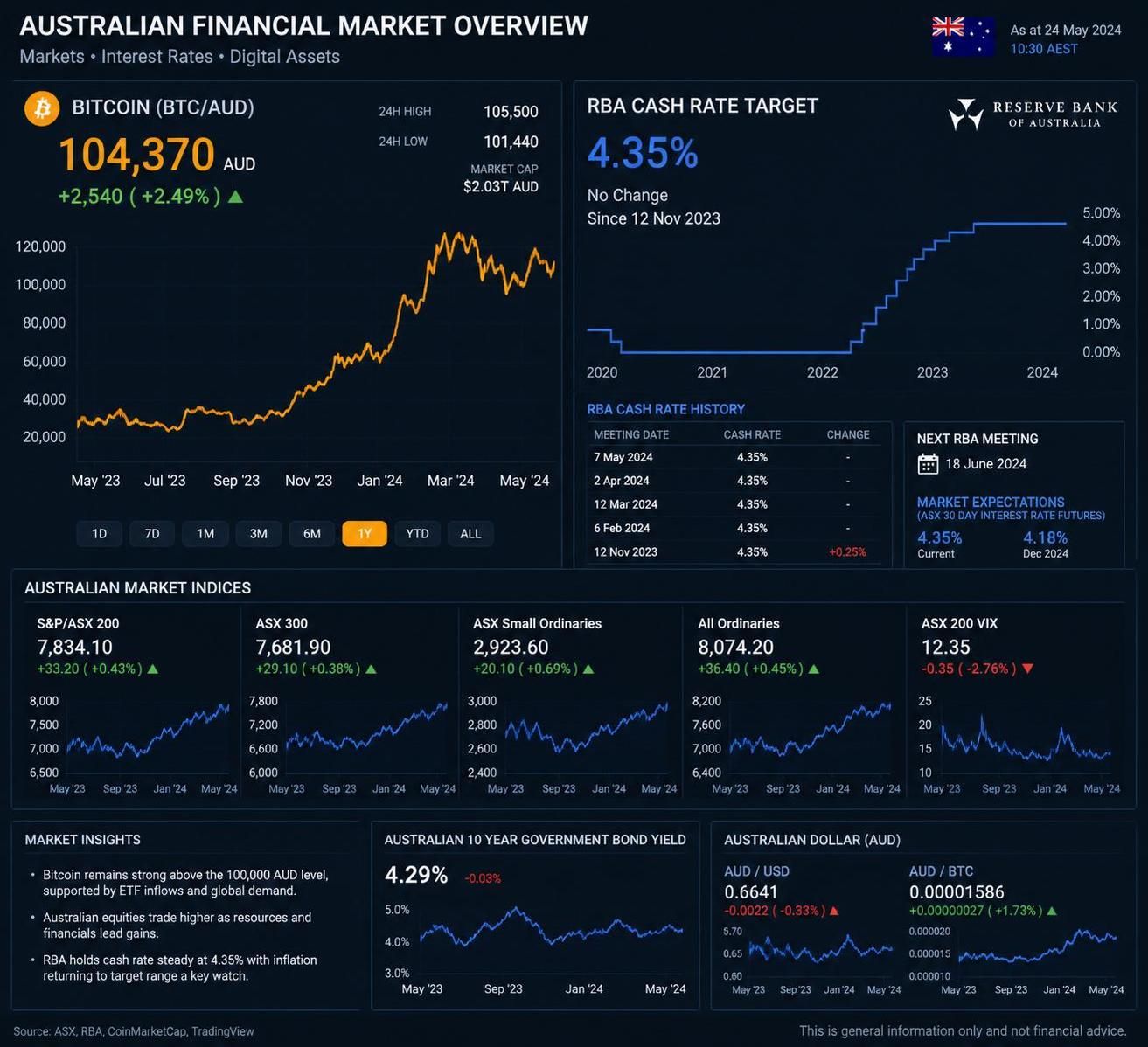
The S&P/ASX 200, Australia’s premier equity index, serves as an effective barometer for domestic market sentiment. When the RBA adjusts the cash rate, equity markets often react swiftly, either rallying or declining based on the perceived impact on corporate earnings and financing costs. Cryptocurrency markets typically experience correlated volatility within 24 to 72 hours following these equity moves, signifying cross-asset spillover effects driven by shifts in investor risk appetite.
Gold, regarded as a traditional safe haven asset, also reflects monetary policy impacts through inflation expectations and currency valuation. The inverse relationship between gold prices and risk assets extends to digital assets, where rising gold prices amid an RBA tightening environment often coincide with cryptocurrency price corrections. These patterns highlight how macroeconomic policy transmission operates symbiotically across asset classes.
For investors attentive to global market trends, monitoring traditional market volatility post-RBA announcements provides actionable insights into imminent cryptocurrency price behavior. Such foresight enhances trading strategies, enabling proactive portfolio adjustments in anticipation of broader market reactions.
Quantitative Effects of RBA Cash Rate Movements on Bitcoin Liquidity and Market Depth
Market liquidity and order book depth are crucial for the stability of cryptocurrency prices. RBA cash rate changes influence these factors by affecting borrowing costs, investment flows, and trading volumes in Australian and international markets. Higher cash rates generally tighten liquidity, resulting in thinner order books and higher volatility for Bitcoin and other digital assets.
Data from recent trading periods indicate that cash rate hikes correlate with decreased Bitcoin trading volume on Australian exchanges, suggesting reduced participation or cautious positioning by investors sensitive to monetary tightening. Conversely, during monetary easing phases when the RBA cuts rates, liquidity improves as investors deploy additional capital into various asset classes, including cryptocurrencies.
A detailed analysis of market microstructure reveals the following quantitative impacts of RBA cash rate adjustments:
| RBA Cash Rate Trend | Impact on Bitcoin Liquidity | Effect on Bitcoin Market Volatility | Typical Investor Behavior |
|---|---|---|---|
| Rate Increase | Reduced liquidity; thinner order books | Increased volatility and price swings | Risk-off; capital flight to safer assets |
| Rate Decrease | Enhanced liquidity; deeper markets | Lower volatility; stable upward trends | Risk-on; increased speculative investment |
| Stable Rates | Neutral liquidity; steady volumes | Moderate volatility | Balanced portfolio allocations |
This table illustrates the direct quantitative relationship between monetary policy and Bitcoin’s trading environment in 2026, emphasizing how the RBA cash rate serves as a catalyst for liquidity fluctuations and market depth variations.
Global Context: Interaction Between RBA Cash Rate and International Monetary Policies Impacting Bitcoin
In an increasingly interconnected global financial system, the RBA’s cash rate decisions interact closely with other major central banks’ policies, notably the U.S. Federal Reserve and the European Central Bank. These international policies collectively influence global capital flows, currency valuations, and investor sentiment, all of which permeate into cryptocurrency markets, particularly Bitcoin which operates on a global scale.
For example, when the RBA raises rates while the Federal Reserve maintains a dovish stance, differential interest rates can lead to capital outflows or inflows affecting the Australian dollar and thus modifying cross-border investment flows into Bitcoin. Such currency fluctuations impact the relative cost of acquiring Bitcoin for Australian investors, creating nuances in price action linked to external monetary environments.
This global interplay underscores the complexity inherent in forecasting Bitcoin prices based solely on domestic factors like the RBA cash rate. Investors must adopt multi-jurisdictional analytic frameworks that incorporate a breadth of monetary policies to fully grasp the risks and opportunities in cryptocurrency markets.
For further understanding of how broader macroeconomic policy impacts cryptocurrency valuations beyond the Australian context, readers can explore detailed analyses available through authoritative sources such as macroeconomic policy impacts on cryptocurrency prices and cryptocurrency macroeconomic market insights.
Strategic Approaches for Investors Navigating RBA Cash Rate Influences on Cryptocurrency Investment
Investment strategies in the cryptocurrency space must adapt continuously to shifts in macroeconomic policy such as the RBA cash rate changes. The understanding of monetary policy implications allows investors to optimize timing, select appropriate assets, and manage risk effectively in the volatile crypto market environment.
Key strategic considerations include:
- Monitoring RBA Announcements: Staying alert to RBA cash rate decisions and accompanying commentary enables proactive portfolio adjustments.
- Diversifying Across Asset Classes: Balancing digital assets with bonds, equities, and commodities to mitigate risks stemming from interest rate volatility.
- Utilizing Hedging Mechanisms: Employing options, futures, or stablecoins to shield portfolios from adverse price swings linked to monetary tightening.
- Emphasizing Liquidity Management: Ensuring sufficient liquidity to capitalize on market opportunities or to absorb shocks during contractionary phases.
- Adapting to Inflation Trends: Aligning investment themes with inflation outlooks influenced by RBA policies, recognizing Bitcoin’s potential as an inflation hedge.
By integrating these approaches, investors can better navigate the intricate relationship between interest rates, market trends, and cryptocurrency prices, thereby enhancing returns while controlling exposure to monetary policy risks.
How does the RBA cash rate directly impact Bitcoin prices?
The RBA cash rate influences borrowing costs and liquidity conditions in the economy. Increased rates tend to reduce market liquidity and investor risk appetite, leading to downward pressure on Bitcoin prices, whereas reduced rates tend to boost liquidity and risk-taking, supporting Bitcoin price appreciation.
Why do inflation expectations matter for Bitcoin in relation to RBA policy?
Bitcoin is often seen as a hedge against inflation due to its capped supply. When inflation rises and the RBA tightens policy, Bitcoin may experience short-term price corrections but can gain in demand over the long term as an inflation-protected asset.
Can global monetary policies affect Bitcoin prices alongside RBA decisions?
Yes, Bitcoin operates globally, and policies from other major central banks like the U.S. Federal Reserve also shape global liquidity and investor sentiment, impacting Bitcoin prices in conjunction with the RBA’s policy moves.
How can investors strategically manage risks related to RBA rate changes in cryptocurrency markets?
Investors can monitor RBA announcements, diversify portfolios, use hedging techniques, manage liquidity, and align investments with inflation trends to mitigate risks associated with RBA cash rate fluctuations.